Fatal Forklift Accidents: OSHA Forklift Safety & 10 Proven OSHA Forklift Safety Tips | Cal-OSHA Forklift Requirements

Understanding the Scope of Fatal Forklift Accidents in the U.S.
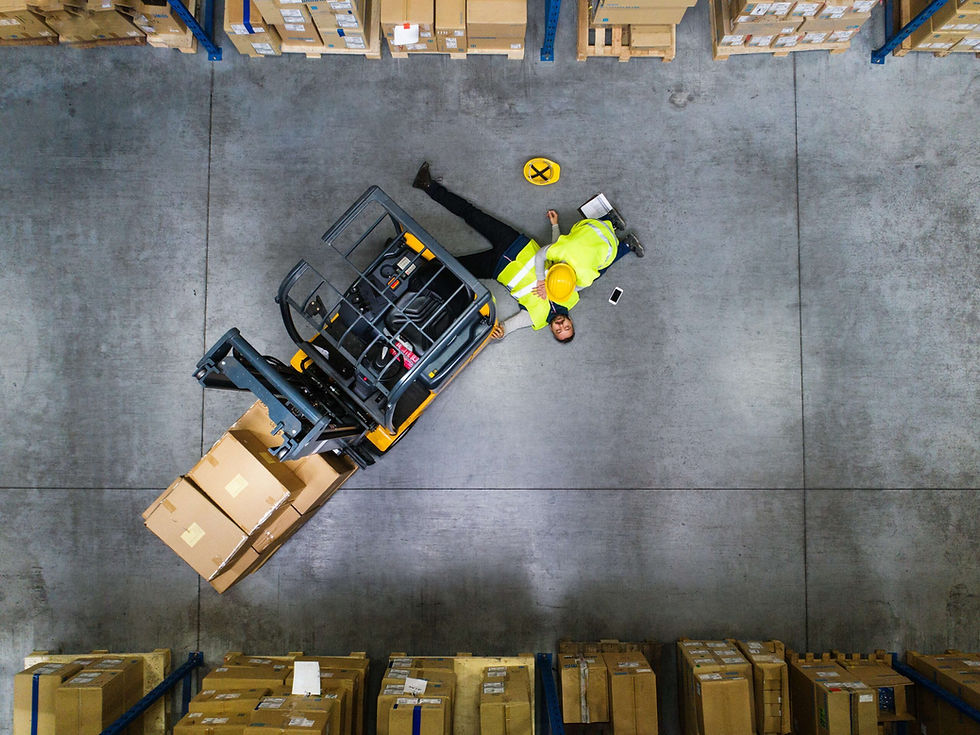
Forklifts are indispensable in modern industry — they move heavy loads, streamline logistics, and keep supply chains running. But when operated unsafely, these powerful machines can become deadly. According to OSHA, roughly 85 fatal forklift accidents occur annually in the United States, alongside an estimated 34,900 serious injuries and 61,800 non-serious injuries.
These incidents span all sectors: manufacturing, warehousing, construction, retail distribution, and even agriculture. Despite ongoing awareness campaigns, forklift-related deaths have remained consistent for decades. The majority occur in general industry, where forklifts are used daily in confined, fast-paced environments.
In California, Cal/OSHA investigations reveal similar patterns — many fatalities happen in warehouses or food distribution centers where speed and production goals can overshadow safety. Workers are often crushed, pinned, or struck by forklifts due to poor visibility, inadequate pedestrian segregation, or insufficient operator training.
Fatal forklift incidents are not isolated “accidents.” They are preventable, predictable events resulting from gaps in training, supervision, and enforcement — all of which employers have the power to fix. Fatal forklift accidents are preventable!
OSHA forklift safety
Cal/OSHA forklift requirements
Fatal Forklift Accidents: The Human and Financial Toll on Employers
A fatal forklift accident shakes the foundation of a business. Beyond the personal tragedy, the organizational impact is immense and long-lasting.
1. Direct and Indirect Costs
OSHA and Cal/OSHA fines:
Willful or repeated violations can cost employers up to $161,323 per violation (Federal OSHA 2025 rates). Cal/OSHA can impose similar or higher penalties under California Labor Code §6425, particularly for “serious” or “willful” citations resulting in death.
Civil litigation:
Families of deceased workers may pursue wrongful death lawsuits, especially if negligence or lack of training can be demonstrated. Settlements and judgments often reach hundreds of thousands or even millions of dollars.
Workers’ compensation:
Even in nonfatal cases, medical costs, lost wages, and rehabilitation add up fast.
2. Morale and Culture
Employees who witness or hear about a fatal forklift incident often suffer psychological trauma, grief, and anxiety. Productivity declines, turnover increases, and trust in management erodes. Restoring confidence can take years.
3. Reputational Damage
OSHA publishes press releases after serious accidents, often naming the company, describing the violations, and quoting agency officials. These releases are widely circulated by media outlets, affecting customer trust, community relations, and investor confidence.
4. Market Share and Operational Disruption
Operations may halt during investigations. Insurers may demand higher premiums or drop coverage. Competitors with stronger safety records gain market advantage. In short, one preventable incident can reshape the future of a business.
OSHA and Cal/OSHA Oversight: What Employers Must Know: Cal/OSHA Forklift Requirements
Federal OSHA Standard – 29 CFR 1910.178
This is the central forklift safety regulation in the United States. It requires that:
Only trained and evaluated operators may use powered industrial trucks.
Training must include both formal instruction (e.g., lecture, video, written materials) and practical demonstration.
Operators must be evaluated at least once every three years, and retraining is required whenever unsafe operation or workplace changes occur.
Employers must certify operator competency in writing — including name, date, and trainer’s identity.
Cal/OSHA Standard – Title 8, §3668
Cal/OSHA adopts similar requirements but expands enforcement:
Inspections focus on training documentation and proof of evaluation.
Employers must train on specific truck types and conditions unique to each site.
Violations can result in “serious” citations even for paperwork lapses if a safety hazard exists.
Cal/OSHA also holds supervisors accountable for failing to enforce safe work practices.
Both agencies can conduct unannounced inspections following fatalities, employee complaints, or referral from media or emergency responders. Employers should always be inspection-ready.
Leading Causes of Fatal Forklift Accidents: Not Knowing Cal-OSHA Forklift Requirements
Understanding how fatal accidents happen is the first step to preventing them.
Tip-Overs (22% of all deaths)
Occur when the forklift becomes unstable, often due to overloading, turning too quickly, or traveling on uneven ground.
Prevention: Maintain proper load balance, travel with forks low, and never jump from a tipping forklift—OSHA advises operators to stay inside, brace themselves, and lean away from the impact.
Pedestrian Strikes (20%)
Forklifts frequently operate in busy aisles shared with pedestrians. Limited visibility, poor lighting, or absent warning signals make collisions common.
Prevention: Use audible alarms, mirrors, and marked walkways. Train workers to establish eye contact before approaching forklifts.
Crushing and Pinning Incidents (16%)
Workers are trapped between forklifts and structures, walls, or other vehicles.
Prevention: Maintain safe clearance, use spotters, and prohibit pedestrians in active forklift zones.
Falls from Elevated Forks (9%)
Employees lifted improperly on pallets or forks without platforms.
Prevention: Only use approved personnel platforms with guardrails and harnesses.
Falling Loads and Overhead Strikes (8%)
Unstable or improperly stacked loads can shift, crushing operators or bystanders.
Prevention: Train operators in load inspection, center of gravity awareness, and proper stacking techniques.
Lack of Operator Training (Primary Cause in Most Fatal Forklift Accidents)
In many OSHA investigations, the deceased operator had no record of proper training or was operating a different truck type than they were certified for.
Root Causes Behind Fatal Forklift Accidents
Beneath every visible cause lies a systemic failure:
Inadequate or outdated training
Too many employers provide “checklist” training — brief video sessions without hands-on practice or evaluation.
Lack of supervision
Supervisors fail to correct unsafe behaviors or pressure workers to “move faster.”
Unsafe environment
Narrow aisles, poor lighting, or cluttered floors increase collision risks.
Absence of enforcement
Policies exist on paper but are ignored in practice.
A true culture of safety requires more than compliance — it demands leadership accountability and employee engagement at every level.
Prevention Through Training and Safety Culture
Forklift safety begins with training and thrives through culture.
Training Requirements
Employers must ensure that every operator is trained and evaluated on:
Operating instructions, warnings, and controls
Differences between forklifts and automobiles
Surface conditions and load stability
Ramps, docks, and pedestrian safety
Refueling or recharging procedures
Refresher training must occur when:
The operator is observed operating unsafely
A new truck type is introduced
Workplace conditions change
An incident or near-miss occurs
Building a Safety Culture
A culture of safety doesn’t develop overnight. It requires:
Visible management commitment — Executives who attend safety meetings send a message that safety matters.
Open communication — Encourage employees to report hazards without fear.
Positive reinforcement — Recognize and reward safe behavior, not just productivity.
Continuous learning — Safety meetings, toolbox talks, and refresher courses keep awareness high.
When employees know management values their well-being as much as production, behavior changes follow.
Cal/OSHA vs. Federal OSHA: Key Differences in Forklift Safety Enforcement
Requirement | Federal OSHA | Cal/OSHA |
Training Frequency | Initial + every 3 years or after incident | Same, but refresher training often enforced more aggressively |
Documentation | Required certification | Must include specific site and equipment details |
Penalty Range | Up to $161,323 per willful violation | Similar, but can be increased for repeat offenders |
Criminal Liability | For willful violations causing death | For any employer who “knowingly” exposes workers to serious harm |
Inspection Focus | Operator training and load handling | Training documentation and real-world competency |
Cal/OSHA frequently issues citations not only for accidents but also during routine inspections, especially in industries with a history of forklift-related injuries.
The Business Case for Forklift Safety
Many employers view safety as a cost. In reality, it’s a profit center disguised as compliance. Companies with strong safety systems report:
50–70% fewer injuries
25% higher productivity
Reduced equipment damage and downtime
Improved worker morale and retention
Every dollar spent on training saves roughly $4–$6 in avoided incident costs (National Safety Council). Furthermore, safety certifications enhance brand reputation and attract top clients who demand compliance as a condition of partnership.
Real-Life Lessons from OSHA Case Studies
Case 1: The Unstable Load
A warehouse worker in Ohio was killed when his forklift tipped while carrying a stacked pallet of drums. OSHA found the load exceeded the truck’s rated capacity. The employer had not trained operators on reading data plates.
Fine: $154,000 (willful violation)
Lesson: Load capacity awareness must be part of every operator’s training.
Case 2: Pedestrian Struck
In California, a forklift reversed into a pedestrian walking through an unmarked area. Cal/OSHA cited the company for failing to separate pedestrian traffic from forklift operations.
Fine: $68,000
Lesson: Always design facilities with clear pedestrian zones, mirrors, and alarms.
Case 3: Fall from Forks
An employee riding on elevated forks fell and suffered fatal injuries.
Lesson: Only approved work platforms may be used for lifting personnel — no exceptions.
Responding to a Forklift Accident: Employer Steps
When tragedy strikes, immediate and lawful response is crucial.
Call emergency services immediately
Secure the area to prevent additional injuries
Notify OSHA or Cal/OSHA within 8 hours of any fatality or within 24 hours for inpatient hospitalization
Preserve evidence for investigation
Conduct a root cause analysis — determine what failed, why, and how to prevent recurrence
Communicate with transparency — inform workers of findings and corrective actions
Provide support — counseling and debriefing help employees cope
A transparent, human-centered response reflects leadership integrity and strengthens trust.
Avoiding OSHA Penalties Through Compliance
Compliance isn’t paperwork — it’s a living process. Employers should:
Maintain daily forklift inspection logs
Conduct unannounced evaluations
Keep training records current and accessible
Perform annual internal safety audits
Document corrective actions following near-misses
Employers who partner with reputable trainers (like EmployeeForkliftTraining.com) gain peace of mind knowing they meet both OSHA and Cal/OSHA requirements.
Forklift Training Programs That Work
A high-quality forklift training program should combine:
Theory (OSHA standards, stability principles, load handling)
Hands-on training (actual operation under supervision)
Performance evaluation (real-world competency)
Documentation and certification
Employee Forklift Training programs are designed by OSHA-authorized instructors, offering:
Multilingual training options
Custom on-site evaluations
Refresher programs aligned with both Federal OSHA and Cal/OSHA
This ensures every operator—not just those new to the job—remains competent and confident.
The Role of Technology in Preventing Forklift Fatalities
Technology now plays a vital role in forklift safety:
Telematics systems track operator behavior, speed, and impact events.
Proximity sensors warn operators of nearby pedestrians.
AI-based cameras detect blind-spot risks.
Geofencing limits forklift access to restricted areas.
These tools help supervisors identify unsafe habits before accidents occur, turning data into prevention.
Creating a Zero-Incident Forklift Workplace
Achieving zero forklift fatalities is ambitious but achievable. It starts with:
Leadership that refuses to accept “accidents happen.”
Supervisors who model and enforce safe behavior.
Employees empowered to halt unsafe work.
Ongoing investment in training, maintenance, and communication.
Zero incidents isn’t a slogan — it’s a commitment that builds stronger, more resilient companies.
Frequently Asked Questions (FAQs)
1. How can employers prevent fatal forklift accidents?By providing OSHA-compliant training, enforcing safe procedures, conducting daily inspections, and fostering a safety-first culture.
2. What happens if an untrained employee operates a forklift?Employers may face citations, fines, and liability if an untrained operator causes injury or death.
3. How do Cal/OSHA inspections differ from Federal OSHA?Cal/OSHA inspections are often more localized and documentation-driven, focusing on site-specific hazards and training records.
4. Can a supervisor be held personally liable after a fatal forklift accident?Yes. Under Cal/OSHA, supervisors who knowingly allow unsafe practices can face individual penalties or criminal prosecution.
5. What’s the OSHA requirement for refresher training?Refresher training must occur at least every 3 years—or sooner after unsafe operation, accidents, or equipment changes.
6. What is the best forklift safety resource for employers?Visit EmployeeForkliftTraining.com for comprehensive OSHA and Cal/OSHA compliant training programs.
Conclusion: Safety Is a Smart Investment, Not a Cost
Fatal forklift accidents are entirely preventable. Every life lost represents a system failure — not fate. Through consistent training, clear policies, leadership commitment, and a culture that prioritizes people over production, employers can eliminate fatalities entirely.
OSHA compliance isn’t just about avoiding fines — it’s about demonstrating care, competence, and responsibility. In the long run, safety investments return dividends in morale, productivity, and reputation.
When employers choose prevention, everyone wins — workers, families, and the business itself.


Comments